
Hi-vis clothing isn't one-size-fits-all. The standard EN ISO 20471 (replacing the older EN 471) specifies three classes of high-visibility clothing, each designed for different risk levels and working environments.
Choosing the wrong class could leave your workers unprotected — or exposed to unnecessary risk.
What is EN ISO 20471?
EN ISO 20471 is the European standard for high-visibility clothing. It sets requirements for:
- Background material — the fluorescent fabric (yellow, orange, or red)
- Retroreflective material — the reflective tape
- Design and coverage — minimum areas of both materials per garment class
The standard applies to vests, jackets, trousers, coveralls, and any garment worn to make the wearer visible in daylight and under headlights.
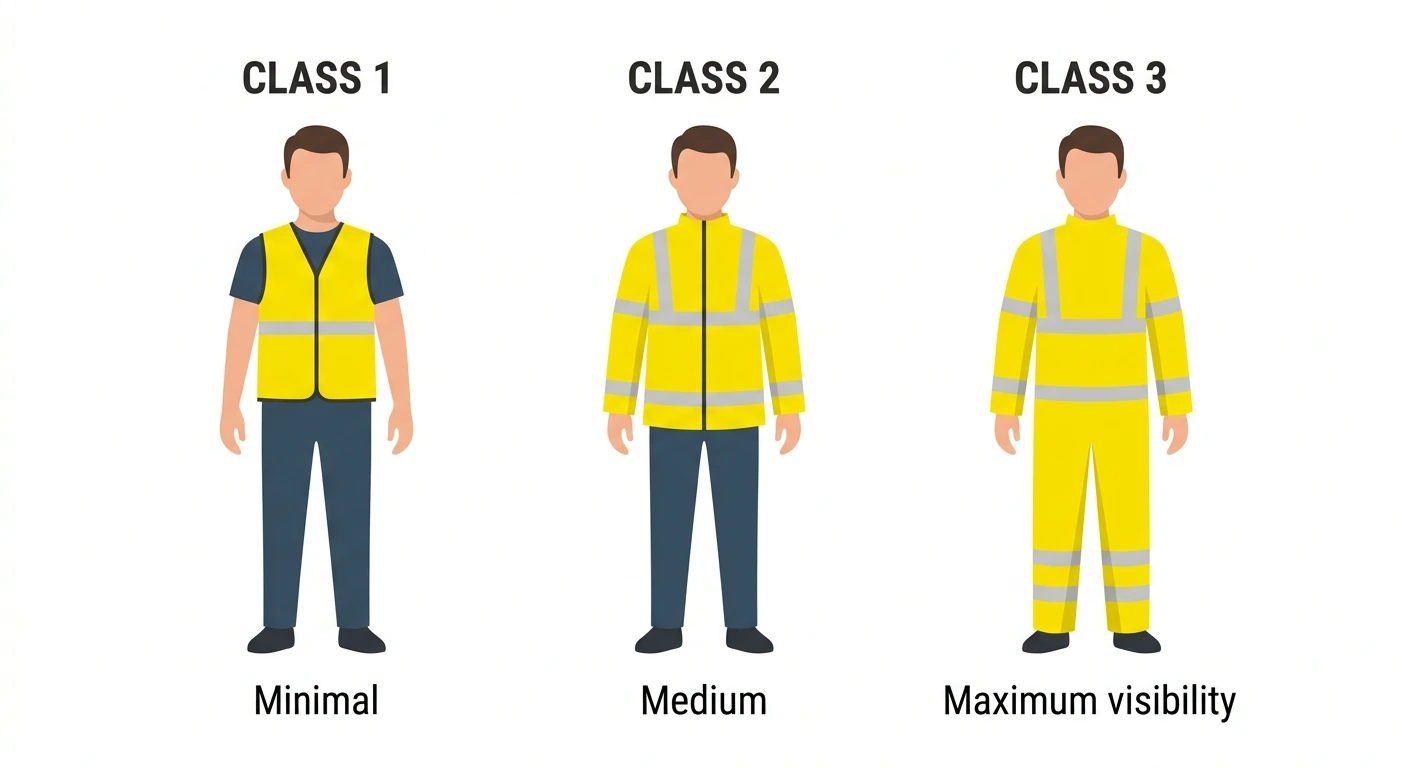
The Three Classes Explained
Class 3 — Highest Visibility
Minimum reflective tape: 0.20 m² | Minimum background: 0.80 m²
- Required for: High-risk environments with fast-moving traffic, motorway work, emergency response
- Typically a sleeved garment (jacket, coverall) to maximise reflective area
- Often combined with Class 2 trousers for full-body coverage
Class 2 — Medium Visibility
Minimum reflective tape: 0.13 m² | Minimum background: 0.50 m²
- Required for: Railway work, airport ground staff, roadside recovery, warehouse vehicle areas
- Can be a sleeved or sleeveless garment depending on the design
- The most commonly specified class for UK workers
Class 1 — Minimum Visibility
Minimum reflective tape: 0.10 m² | Minimum background: 0.14 m²
- Suitable for: Low-risk environments, car parks, loading bays with segregated traffic
- Typically a vest or sash-style garment
- NOT suitable for roadside or high-traffic areas
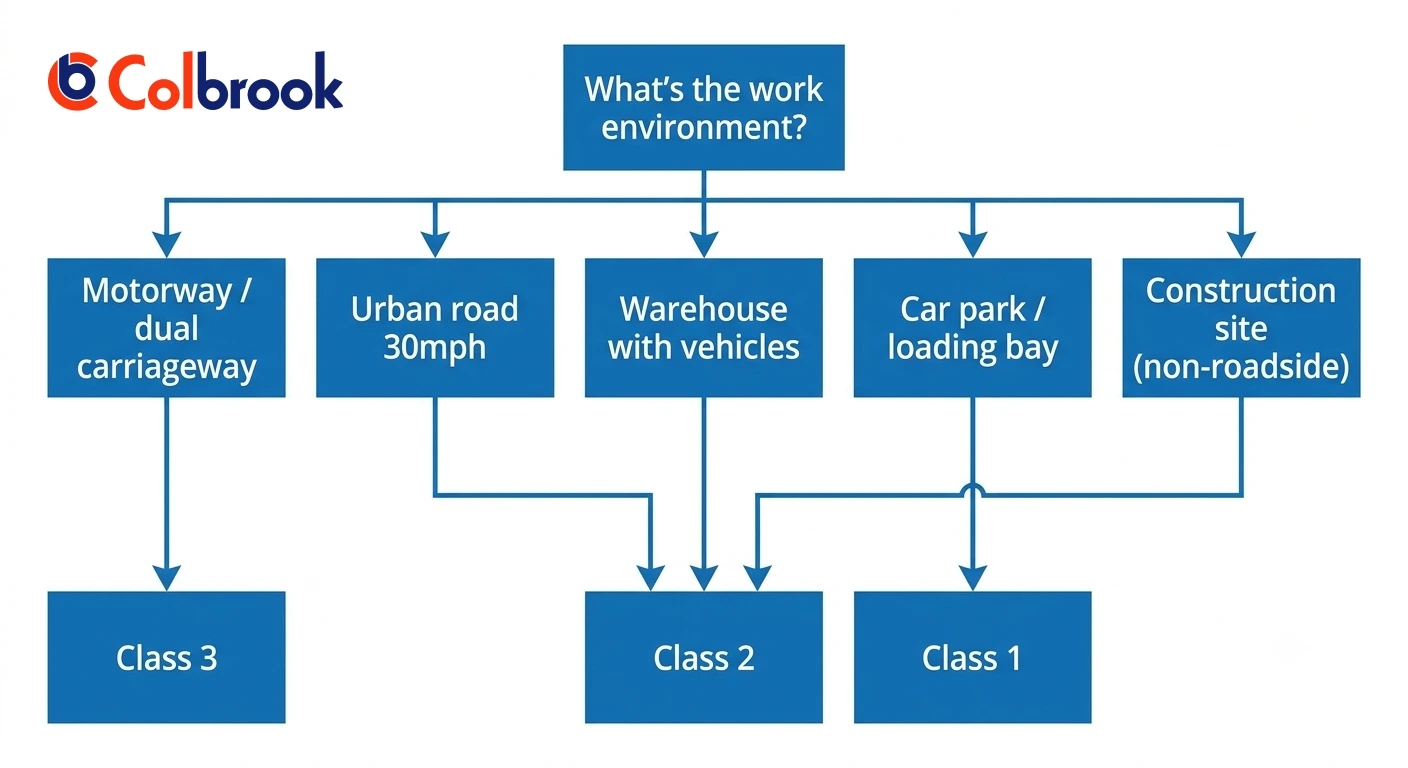
Which Class Do You Need?
| Environment | Recommended Class |
|---|---|
| Motorway / dual carriageway | Class 3 |
| A-road with 40mph+ traffic | Class 3 |
| Urban road with 30mph traffic | Class 2 |
| Railway track access | Class 2+ |
| Warehouse with vehicle movement | Class 2 |
| Car park / delivery bay | Class 1 |
| Construction site (non-roadside) | Class 2 |
| Airport apron | Class 2+ |
Beyond EN ISO 20471: Other Standards
| Standard | Applies To | Key Requirement |
|---|---|---|
| EN 20471 | Hi-vis clothing | Classes 1-3 for visibility |
| EN 343 | Waterproof clothing | Protection against rain (Class 1-3) |
| EN 342 | Cold protection | Insulation against cold |
| EN 14058 | Cold environment clothing | Protection in cool environments |
| EN 471 | Superseded hi-vis standard | Old — replaced by EN 20471 |
Washing and Care
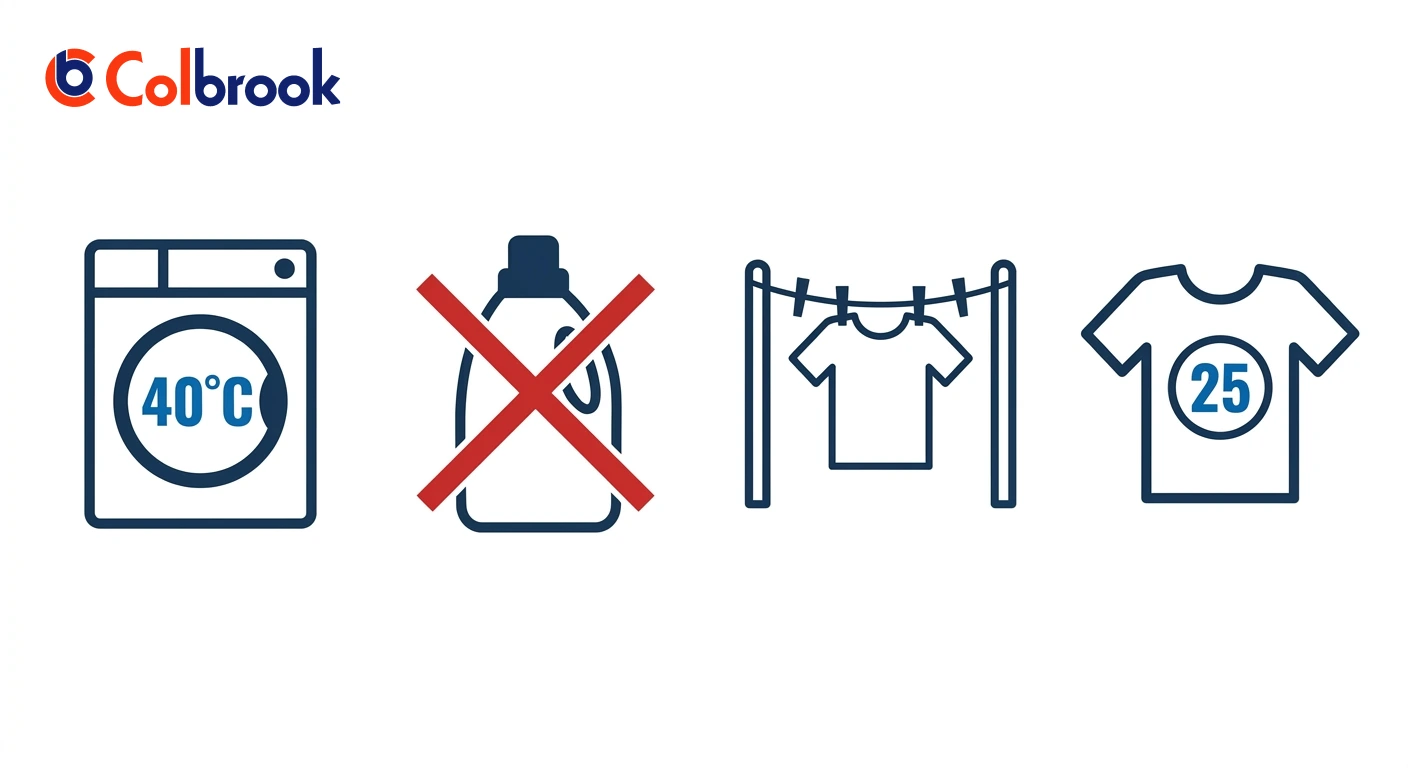 Hi-vis performance degrades with washing. Reflective tape loses reflectivity over time.
- Wash at 40°C maximum (60°C for heavy soil)
- Do not use fabric softener — it coats the reflective tape
- Tumble dry low or line dry
- Replace garments when reflective tape shows visible wear or cracking
- Typically: 25 washes is the limit for EN ISO 20471 certification
Common Mistakes
- Wearing a Class 1 vest in a Class 2 environment — common on construction sites
- Pairing a Class 3 jacket with no hi-vis trousers — drivers see the top half only
- Using old EN 471 garments without checking the cert still valid
- Over-washing degrading reflectivity — replace on schedule, not when visibly dirty
Need Help Choosing?
We stock hi-vis from Portwest, Result, Yoko, Warrior, and WX2 Eco — covering all three classes. Browse our hi-vis range or call +44(0)1236 755544.
This guide is for informational purposes. Always conduct a full risk assessment and consult the HSE for your specific workplace requirements.
