
Asbestos shows up in more buildings than most people expect. Pipe lagging, ceiling tiles, textured coatings, cement roof sheets: in a building built or refurbished before 2000, any of them could contain it. And if you are a contractor or maintenance team, the question is not whether you will meet it, but what happens when you do.
Under the Control of Asbestos Regulations 2012 (CAR 2012), work with asbestos splits into three categories: licensable work, notifiable non-licensed work (NNLW) and non-licensed work. Getting the category wrong can mean a stop notice, a fine, or worse, a prosecution. Getting it right starts with knowing the difference.
Licensable work: the jobs only a licensed contractor can do
Some asbestos work is simply too dangerous for anyone without an HSE licence. That includes removing sprayed coatings (limpet asbestos), disturbing pipe lagging, working with loose fill insulation or asbestos millboard, and any work on asbestos insulating board (AIB) that is not short duration.
Short duration means no more than one hour per person, with no more than two hours total in any seven day period. If the job on AIB or insulation takes longer than that, it is licensable, full stop.
Licensed contractors must notify the enforcing authority using the ASB5 form at least 14 days before work starts. Carrying out licensable work without a licence is an offence, and HSE prosecutes it.
NNLW: notifiable, but not licensed
NNLW is the middle ground. The work does not need a licence, but it still carries enough risk that HSE wants to know about it. Typical examples are removing asbestos cement sheets that are damaged or have to be broken up (including dropping a cement roof), large-scale removal of textured coatings like Artex using steam or gel, and short-duration removal of AIB as part of a refurbishment.
If you do NNLW, you have four extra duties. You notify the enforcing authority through the HSE online form before work starts (there is no minimum notice period and you do not wait for approval). You designate and sign the work area, and keep people out of it. Your workers need medical examinations: a chest check and lung function test before starting, then at least every three years, at your cost. And you keep a health register for each worker for 40 years.
Non-licensed work: still controlled, still protected
The lowest tier is non-licensed work: carefully removing intact asbestos cement sheets without breaking them up, maintenance on floor tiles, bitumen roof felt and gaskets, and small patches of textured coating taken off with dust-reducing methods.
"Non-licensed" does not mean "no controls". The material still needs damping down, you still wear RPE and disposable coveralls, and you still bag and dispose of waste properly. It just means the extra notification and medical duties do not apply.
How to decide which category your job falls into
Work it through before you start, as part of your risk assessment. Four questions do most of the work:
- What is the material? Sprayed coatings, lagging, loose fill and AIB point towards licensed work. Cement, tiles, textured coatings and bitumen usually do not.
- How friable is it? If it crumbles to powder easily, fibres can escape. Friable material pushes the job up a tier.
- What condition is it in? Fire, flood or general decay can turn a normally non-licensed material into NNLW.
- How long will it take? More than an hour per person on AIB or insulation, or two hours total in a week, and it is licensable.
If the material has not been identified, treat it as asbestos until a lab says otherwise. And when the job is anything other than straightforward, get a survey and a written risk assessment first.
PPE and RPE: what each tier needs
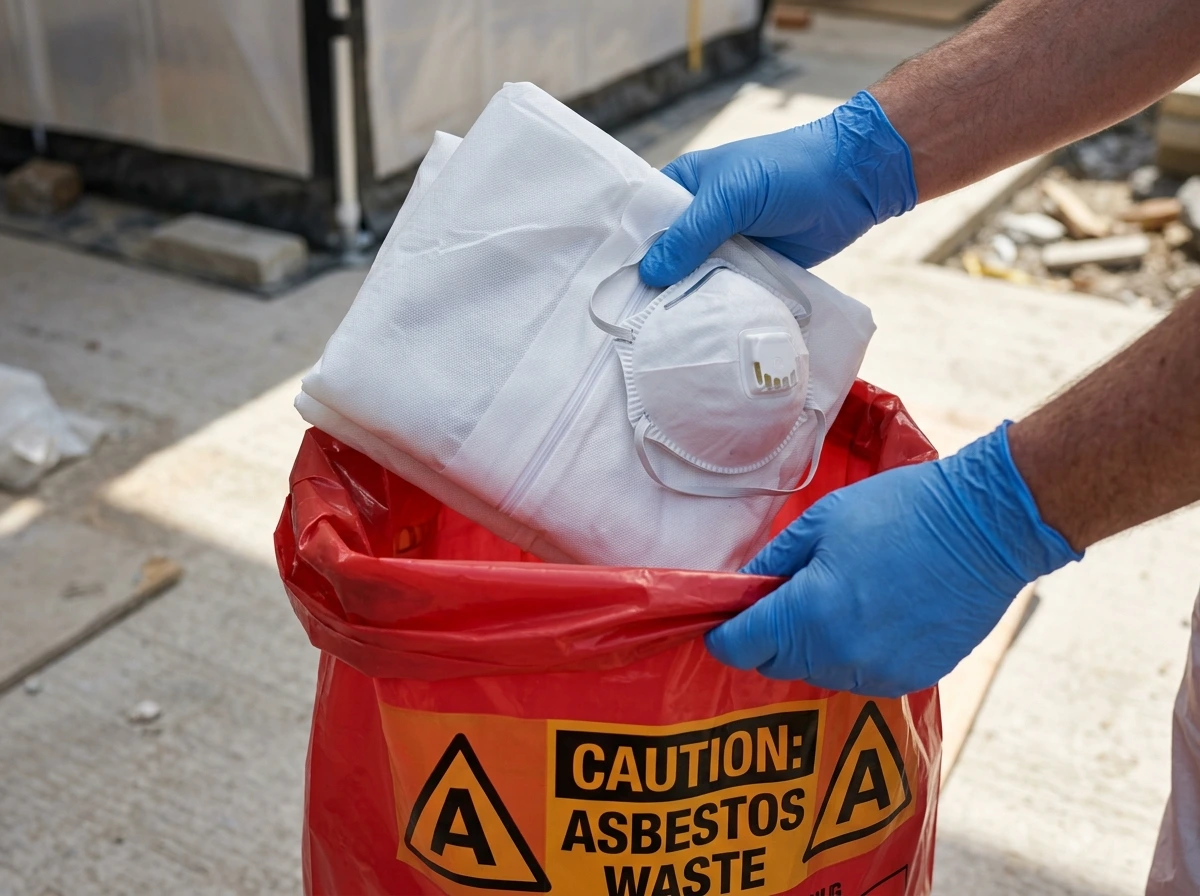
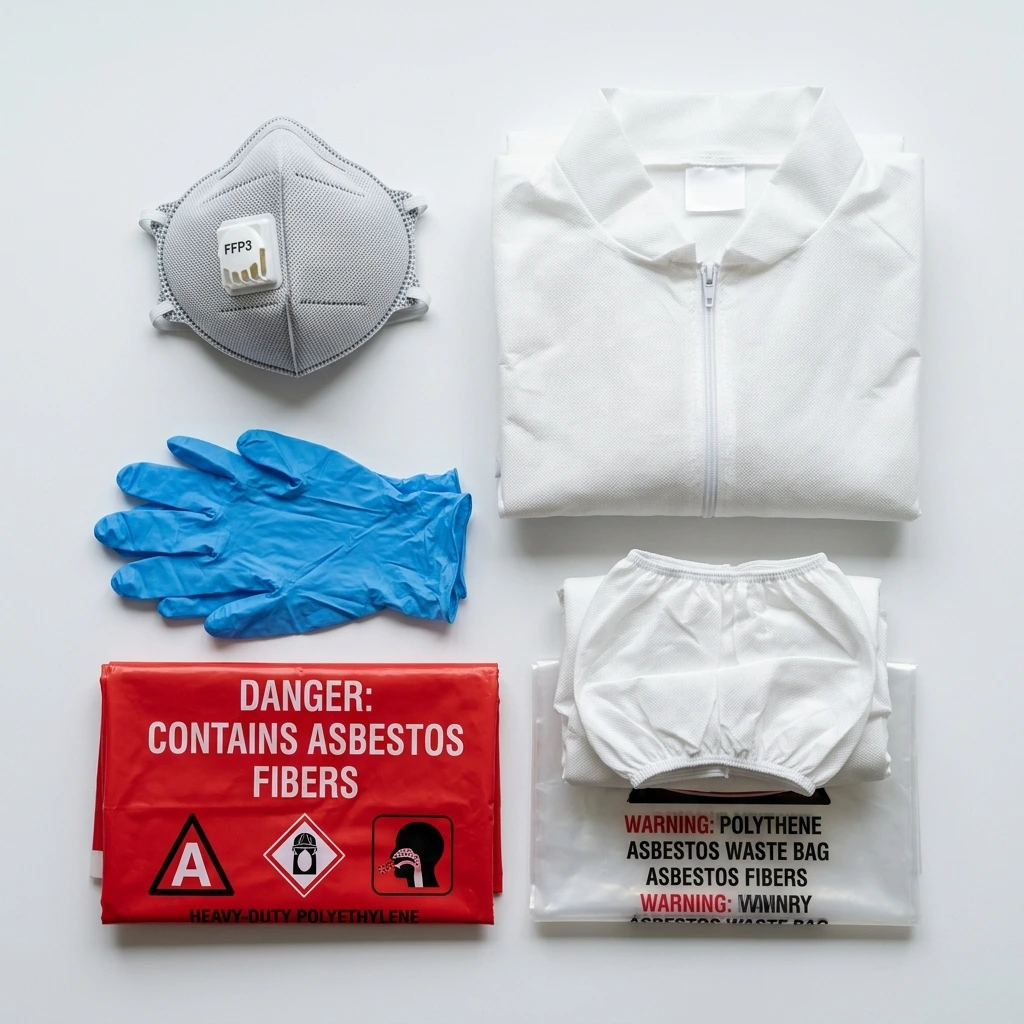
Whatever the category, the protection follows the risk. FFP3 disposable respirators (EN 149, protection factor 20) are the minimum for most asbestos work. For longer or higher-exposure jobs, move up to a half mask with P3 filters; licensed-scale work normally means full face or powered protection. Whatever you choose, every wearer must be face-fit tested. A mask that leaks is a mask that does not exist.
On the body: Type 5 disposable coveralls with a hood (EN ISO 13982-1), nitrile gloves, and overshoes or boot covers. When the job is done, strip the PPE in the right order (overshoes and gloves first, coverall off inside-out, RPE last) and bag everything as asbestos waste. Double bag it in labelled asbestos waste bags, keep it damp, and send it off with a licensed waste carrier.
We have put the full breakdown on our asbestos removal PPE page, with the FFP3 respirators, half masks, P3 filters, Type 5 coveralls, gloves, overshoes and asbestos waste bags we stock, all available to order online.
The short version
Sprayed coatings, lagging, loose fill and longer jobs on AIB need a licensed contractor. Damaged cement sheets, big Artex strips and short AIB removal are NNLW: notify, designate, medicate, record. Everything else is non-licensed, but still needs proper controls and proper PPE.
If you are not sure which tier applies, ask. HSE publishes the full decision guidance free, and we are happy to talk through the PPE side of things on 01236 755544. The whole PPE range is in our online shop, with next-day delivery options.